
A Room-By-Room Guide to Fall-Proofing the Home
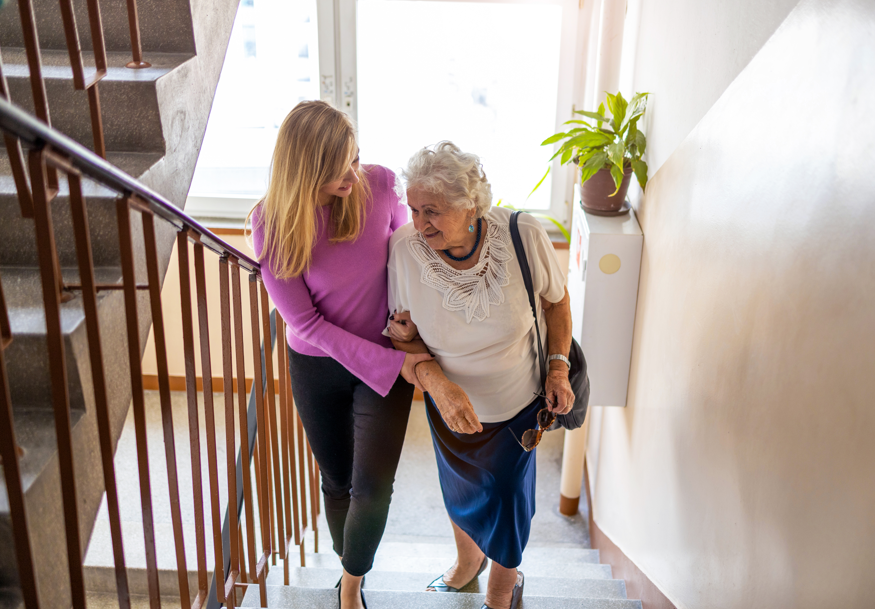
Many falls happen at home; in spaces we move through every day. Over time, things like poor lighting, loose rugs, clutter, or a missing handrail can become easy to overlook. The good news is that making a home safer doesn’t necessarily require major renovations. Start by walking through each room with a fresh set of eyes and looking for small changes that can reduce the risk of a fall.
Entryways and Stairs
- Make sure stairs have secure handrails and the steps are in good repair.
- Keep stairways and entryways clear of shoes, bags, packages, and other items that can become tripping hazards.
- Make sure indoor and outdoor stairs are well lit, particularly at the top and bottom.
- Check outdoor walkways for cracks, uneven surfaces, leaves, snow, and ice.
Bathrooms
Bathrooms deserve extra attention because wet, slippery surfaces can make it harder to maintain balance.
- Install securely mounted grab bars near the toilet and in the tub or shower. Don’t rely on towel bars for support, they aren’t designed to hold a person’s weight.
- Use non-slip strips or a secure non-slip mat in the tub or shower.
- If getting up from the toilet is difficult, ask a health care professional whether a raised toilet seat or other equipment might help.
- A shower chair or tub bench may make bathing safer for someone who has difficulty standing or maintaining balance.
Bedroom
- Keep a lamp and phone within easy reach of the bed.
- Use night-lights to illuminate the route between the bedroom and bathroom.
- Keep the floor and path around the bed free of shoes, clothing, cords, and other clutter.
- Make sure getting in and out of bed is comfortable and safe. If it has become difficult, an occupational or physical therapist can help identify changes or equipment that may help.
Kitchen and Living Areas
- Remove loose throw rugs or secure them with non-slip backing.
- Keep frequently used kitchen items within easy reach so there’s less need for climbing or reaching overhead.
- Keep walking paths clear of electrical cords, low furniture, pet toys, and other objects.
- Look for dim areas and add lighting where needed, especially in hallways and between rooms.
Take the Walk Yourself
One of the simplest things a caregiver can do is walk through the home as if seeing it for the first time. Look at the routes your loved one uses most often — from the bedroom to the bathroom, the living room to the kitchen, or the front door to the stairs.
Ask yourself: Is there anything here that could make someone trip, slip, reach, climb, or lose their balance?
You don’t have to change everything at once. Start with the areas that present the greatest risk and make improvements from there.
Get a Free Falls-Prevention Guide
The Commonwealth of Massachusetts offers free falls-prevention information and resources for older adults and caregivers, including guidance for making the home safer.
Massachusetts Falls Prevention Helpline: 800-227-7233
Learn more: mass.gov/older-adult-falls-prevention
If you’re unsure what services or supports may be available locally, Boston Senior Home Care can also help connect older adults and caregivers with resources that support safe, independent living at home. Contact us at [email protected] to learn more